
Find a Michigan Property Owner
An address-based search works best when you follow one parcel the whole way. Begin in the local tax records. Michigan splits the duties among separate custodians. The assessor keeps the tax roll. County GIS helps you locate the parcel. The Register of Deeds records conveyances. A statewide map or directory can point you to the right office. It cannot replace what that office holds. Keep the address, PIN, legal description, municipality, and tax year together throughout the search. That habit prevents a common name or a mailing-city mismatch from pulling you toward the wrong property.
- Find the county and assessing city, township, or village for the property. Do not assume the mailing city is the taxing unit.
- Search the local assessor or participating BS&A record by address, name, or parcel number, using whichever fields that system supports.
- Write down the owner or taxpayer label exactly as shown, along with PIN, legal description, tax year, and roll date.
- Use the PIN and owner name to find the latest conveyance at that county's Register of Deeds, then compare the grantee and legal description.
- If the labels conflict or the deed is not indexed yet, contact the county record custodian and describe the mismatch instead of guessing.
- Owner of record
- The person or entity named in an official ownership record, such as the local assessor's current owner or taxpayer field.
- Grantee
- The person or entity receiving an interest in a recorded conveyance.
- Title
- The legal interest in property; a public index result alone is not a title opinion.
- Situs and mailing address
- The situs is the property location; the mailing address receives tax notices and may be different.
Ownership questions rarely have one tidy answer. The public tax roll shows one thing. The recorded deed shows another, and both can lag reality for different reasons. Treat the parcel card together with the deed records. That pairing gives the best available picture of who holds title. To verify the current assessor entry line by line, turn to the Michigan current owner record. It walks through each field and date.
Michigan Owner Fields Vary by County
Michigan has no single owner-field label. One county card reads Owner. Another says Taxpayer, Owner of Record, or Deeded Owner. Copy the exact label and the assessment year it reflects. Remember the roll is an annual snapshot. Each local portal refreshes on its own schedule. Nothing about the fields is standardized across the state.
Some jurisdictions run their property records through BS&A Online. There you can search by address, name, or parcel number. Other counties and cities rely on different vendors or separate assessor pages. A result from any portal is a record of that local system. It is not a uniform statewide field.
The image shows the search choices on one participating Michigan BS&A jurisdiction. It is one local entry point among many, not a universal state search.
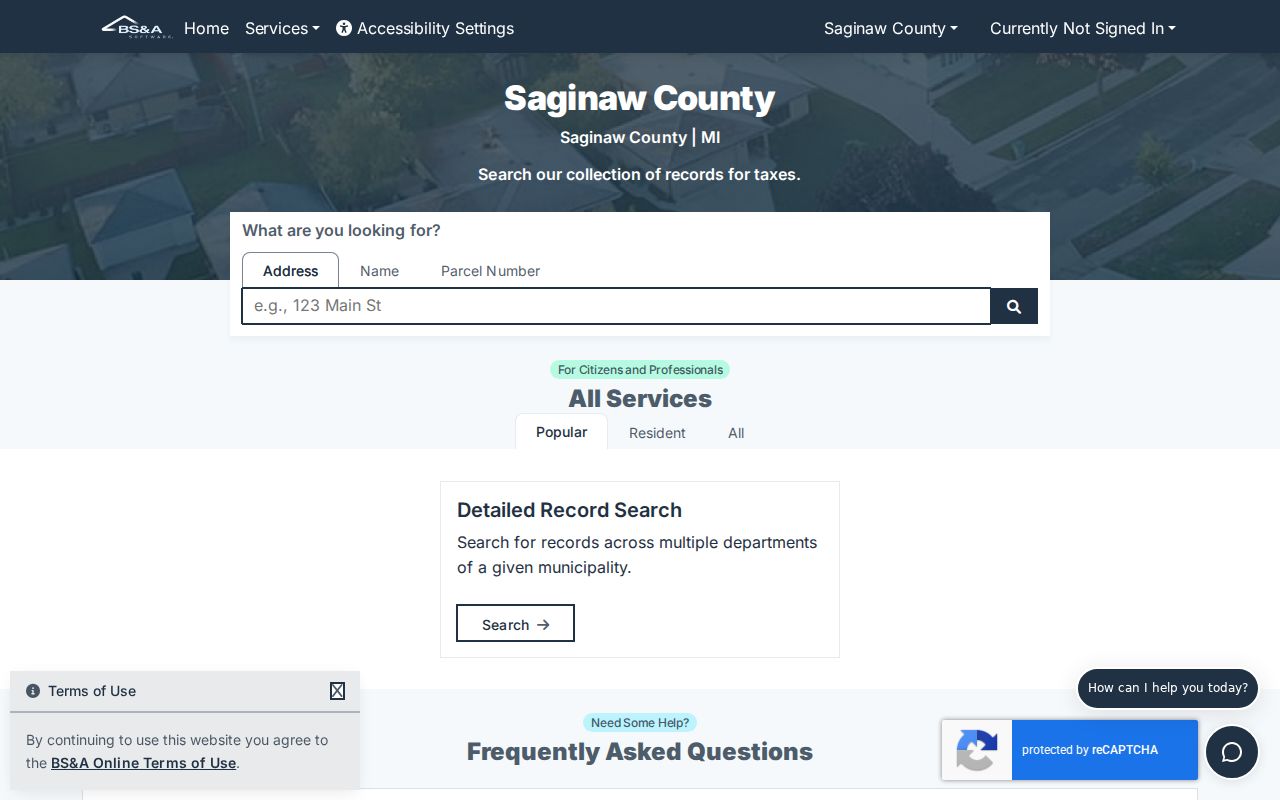
Work with the search options your actual county provides. Some local units publish no owner field online. In that case, ask the assessor for the official parcel card. Staff can also tell you whether the roll or tax record is open for inspection or copy.
Where Michigan Property Ownership Appears
Several public sources can tie a person or entity to a parcel. They serve different purposes and stay current at different speeds. A parcel map or GIS map points you toward the local card. The assessor's tax roll carries the owner field. The deed index, in turn, points to the recorded grantee. That is the name the recorder holds. Trust none of them alone. Ownership shows up in layers. The wisest search checks more than one.
| Record source | What it can show | How to read it |
|---|---|---|
| Local assessor or tax roll | Owner or taxpayer label, mailing address, PIN, legal description, values, and tax year where shown | Current roll entry; local format and refresh vary |
| County Register of Deeds index | Grantee and grantor names, instrument type, recording date, and document reference where indexed | Use the actual recorded instrument to confirm the indexed entry |
| County GIS or parcel system | Parcel geometry and, where supplied, PIN or links to local records | Location aid; layers and owner fields are not uniform |
| Local office response | Access route for a record not shown in the portal | Ask the office that keeps the record; fees and copy rules vary |
Ownership information surfaces in different ways. Depending on the county and the record type, you may reach it online, by email or mail, at a counter, or through a public terminal. Some indexes are digital. Others still live in books. Michigan FOIA lets you submit a written request for an existing public record, though it cannot force an office to build a new ownership answer for you. Courts and vital records follow separate access rules. Name the record you want, such as a tax card, deed, or parcel entry, rather than asking an office to certify an inference.
Confirm a Michigan Owner Through a Deed
The county Register of Deeds is where land instruments get recorded. Each office holds the deed records for property inside its own county. Michigan runs no unified statewide grantor-grantee search. The Department of Treasury's Register of Deeds directory points you to the right county office. From there, everything varies. The local index, the vendor, the searchable fields, the fees, and the online coverage all differ. None of it carries over from one county to the next.
Start with the owner name as grantee. Then search for that same party as a grantor in a later transfer. A grantee receives an interest in the instrument. A grantor conveys it. Pull the instrument number or book and page. Also pull the recording date and the legal description where shown. A deed index only identifies a filing. So it never substitutes for a legal title opinion.
Timing matters too. A county may display a document entry before staff finish indexing names or legal descriptions. The Oakland County Super Index flags index and verification status. Recording information can appear right away while names and descriptions lag behind. Treat that as a timing caution rather than a statewide promise. When only the owner name matches, compare the legal description. Do not assume it is the same parcel.
The recorded document and its index deserve a fuller treatment. The Michigan deed-records route goes deeper. In this method, the deed serves as the confirmation step. It turns a name from the tax roll or a parcel lookup into verified ownership.
Michigan's 45-Day Transfer Affidavit
The 45-day rule belongs to the buyer. After a transfer, the grantee files Property Transfer Affidavit Form 2766 with the city, township, or village assessor. The form is also called L-4260. The form records the address, county, transfer date, purchase price, seller, buyer, PIN, and, where no PIN exists, the legal description. Missing that deadline is a problem for the new owner. It is not proof that a deed failed.
Local rolls work on an annual cycle. The assessment date is December 31 for the following year. So months can pass between the deed recording and the tax card's refresh. Michigan publishes no statewide figure for assessor processing time. Before calling an owner-field mismatch a failed transfer, check the latest deed and the assessor's own dates.
The key distinction: filing is the owner's duty, while public display timing varies by locality. Compare the roll year against the latest recording date. Do not rely on any statewide refresh estimate for Michigan property records.
Michigan Trust, Estate, and Company Names
A parcel's listed owner may be an LLC, corporation, trust, estate, trustee, personal representative, or other fiduciary rather than an individual's everyday name. The deed may state a person's capacity, such as trustee or personal representative. Search the exact recorded party name and spelling, including punctuation and entity suffixes, because searching only for a person associated with the property can miss the indexed grantee.
The tax roll and deed may label the same interest differently. A taxpayer name can be a mailing contact, while the deed names the grantee or fiduciary capacity. The records answer who they identify in each role; they do not necessarily disclose beneficial ownership or every person behind an entity. Avoid converting an entity label into an unsupported claim about a natural person's ownership.
When an estate or fiduciary transfer appears, check the instrument type and legal description, then ask the county clerk or probate court for the right case route if the recorded deed points to an estate proceeding. A probate file may require a clerk request or courthouse access; a public case-search result is not the whole file.
Michigan Owner Address and Property Address
Two addresses sit on most parcel records. The situs address identifies where the property stands. The mailing address is where tax notices go. It may differ from the situs entirely. That split helps you read a Michigan property record, but it shows neither where the owner lives nor who occupies the building.
Mailing labels can also be stale, shared, or tied to a trustee or business. An assessor field is not a contact guarantee. A GIS map or portal should never be used to infer a private home address. When a mailing name looks unfamiliar, confirm against the deed and ask the assessor about the field.
Michigan Owner Records and Address Privacy
Just because a field is public does not make it fair game to copy. Stick to the owner label, parcel number, and recording details needed for the property question. Leave out full birth dates, signatures, account numbers, and protected addresses. Court records can be sealed or limited. An assessor or GIS result is not a personal profile.
Michigan runs an Address Confidentiality Program, or ACP. It gives participants a designated address with mail forwarding. State and local agencies must accept that address for the program's purposes. ACP information stays outside ordinary FOIA disclosure except as authorized by law. Never try to infer a protected physical address from a parcel or mailing record.
The image shows the Michigan Attorney General's ACP information page. Read the official program information for its privacy scope. Any owner lookup must respect that protection.
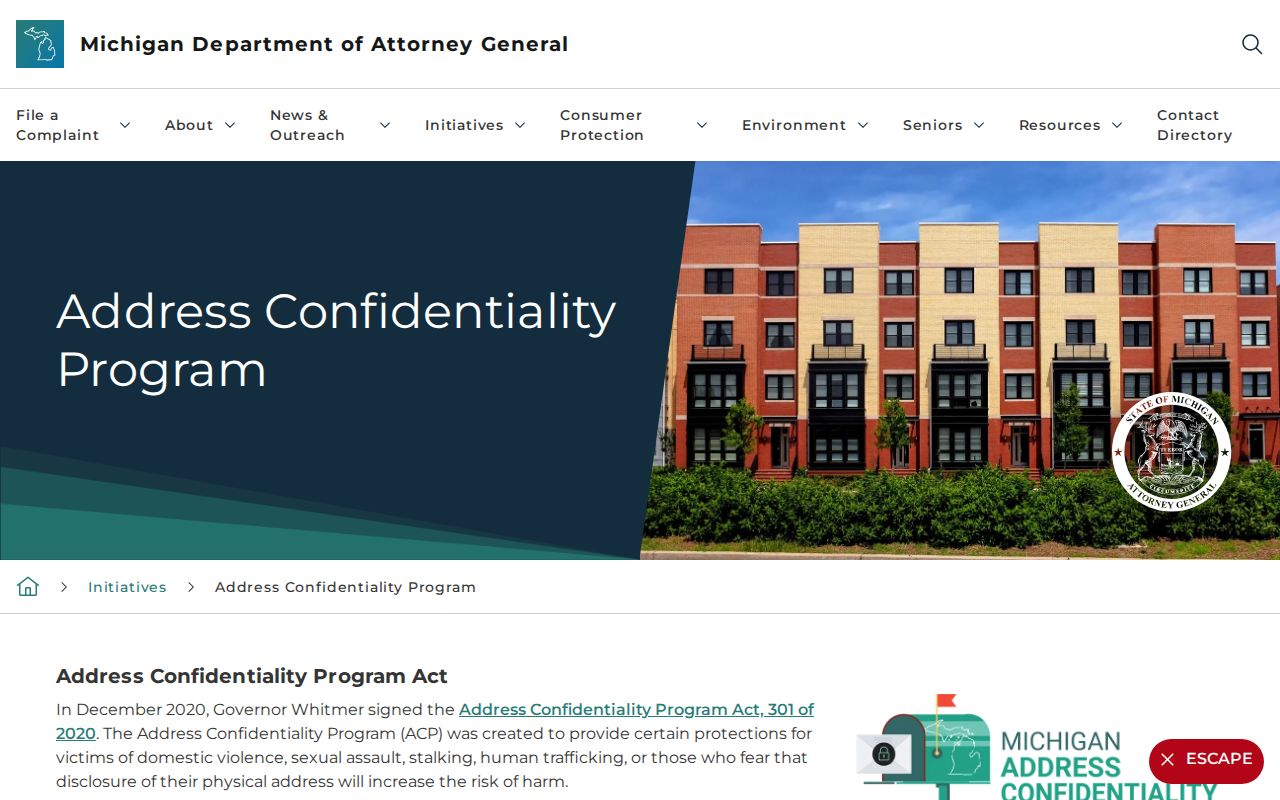
Note: An ACP address is never a clue to a participant's location, so keep any copied note to the minimum fields a property record comparison requires.
Limits of a Michigan Owner Lookup
A tax-roll name proves very little on its own. It does not establish the full chain of title. It also fails to show the occupant, the authority to sell, or the absence of another recorded interest. The latest deed and its legal description are stronger evidence of the conveyance. But even an index and instrument do not amount to a title opinion. An ownership or marketable-title dispute needs a title professional or attorney.
When assessor and deed fields disagree, keep the source, date, parcel number, and exact label for each. Ask the local assessor about the roll and the Register of Deeds about the instrument. Michigan property records have privacy limits. No owner lookup should be used to harass, intimidate, or work around a protected address.
Owner name is not title proof. Treat the roll as a tax record and verify a recorded transfer with the county Register of Deeds. A map or owner label cannot replace a title search or authorize contact that violates another person's privacy.