
Trace Michigan Former Owners Through Deeds
A Michigan deed chain is built instrument by instrument. Each filed deed shows its parties, recording date, and property description. Treat the table below as a retrieval plan. It is not a sample parcel history. Actual people, dates, and deed types must come from the county index and the recorded image; one deed's grantee is often a later deed's grantor, though estates, trusts, fiduciaries, and company names can bend the search path.
| Transfer to trace | Record date | Grantor → grantee | Deed type / reference |
|---|---|---|---|
| Latest transfer | Recording date shown by county index | Recorded grantor to current grantee | Instrument number or liber/book and page |
| Prior conveyance | Earlier indexed recording date | Prior grantee to latest grantor | Deed type and legal description |
| Older book entry | Date in deed book or microfilm | Earlier party names, checked in both roles | Book/page, volume, or archive reference |
| Plat or tax-roll lead | Year of map or assessment roll | Landowner name tied to lot or description | Subdivision, lot/block, township/range/section |
Use the county Register for instruments and images. When the portal cutoff arrives, move to books, microfilm, or an archive. A plat helps when a lot description changed. A tax roll can supply a year-specific owner of record lead, but neither source replaces the deed as evidence of a recorded transfer.
Michigan Online Index Years Vary by County
Michigan sets no single oldest-online year for deed records. Oakland County states one clear boundary. Its Super Index provides online recorded-document copies back to January 1, 1964, with subdivision plat maps excluded. Other counties may publish a certification date without ever naming the first year in the index. A portal's oldest visible result is not proof. Surviving records may run much deeper. Log the county, the portal, and the earliest year the county actually states. Note the older-record route too. If no official landing page names a starting year, write down that the year was not stated there. Then ask the Register about book and page ranges, microfilm, terminal access, or copy requests instead of guessing. Oakland's coverage statement applies to Oakland alone. A former-owner search may still need county books where the online index starts later, and the Michigan Register of Deeds directory helps you reach the correct county office, though it does not provide the index itself.
Oakland's 1964 Cutoff Is a Coverage Example
Oakland reports nearly 18 million land records dating to the early 1800s. Its online copies cover 13.7 million records from 1964. Subdivision plat maps sit outside that count. The published boundary helps you plan a search. It should not, however, be carried over to another Michigan county, since a county can hold older deed books even when its online copies start later.
Oakland's guide adds one caution. Documents can appear by recording information before staff finish indexing names and legal descriptions. A grantee search may briefly miss a recent filing. Check the document number or date if you know one. Ask the county before concluding a transfer is absent. The Oakland County land-record page states the online-copy coverage and routes visitors to the Super Index.
Follow the Michigan Grantor-Grantee Chain Backward
Former-owner research begins with the latest deed. Read from grantee to grantor. The grantor conveys the interest; the grantee receives it. Search both roles, because the same person can appear on either side as the chain moves back through the property records. Match the legal description and parcel number rather than a familiar name.
- Find the latest relevant conveyance and save the instrument number, recording date, deed type, and full legal description.
- Record the grantor and grantee exactly as indexed, including any trust, estate, LLC, or fiduciary capacity.
- Search the grantor's name as a prior grantee, testing spelling and name variations when the description still matches.
- Compare the next deed's legal description, parcel history, and book/page or document reference before moving farther back.
- When the online coverage ends, ask for the older volume or microfilm and continue the same sequence there.
- Grantor / grantee
- The party conveying an interest and the party receiving it.
- Chain of title
- The linked sequence of recorded instruments that shows prior conveyances.
- Book/page
- A volume and page reference used in older index systems; newer systems may use a document number.
- Legal description
- The land description that helps match the same property across address and parcel changes.
Michigan Portal Notices Show Different Dates
A current-through or certification date tells when an index was last certified, not how far back the deed records reach. Oceana's GovOS page shows one, with no earliest online year on its landing screen. The controls include a recorded-date range, quick date windows, an image option, and index-only or index-plus-OCR search. Shared vendors guarantee nothing. Two portals can use the same vendor and still publish different records and fees. The Eaton County search posts its own coverage notice. So does every other county system. If a name search returns nothing, try a known recording date, document number, subdivision, or exact legal-description terms. Never treat OCR text as the instrument. Read the image and confirm the parties. Portal indexing can lag behind the recording itself.
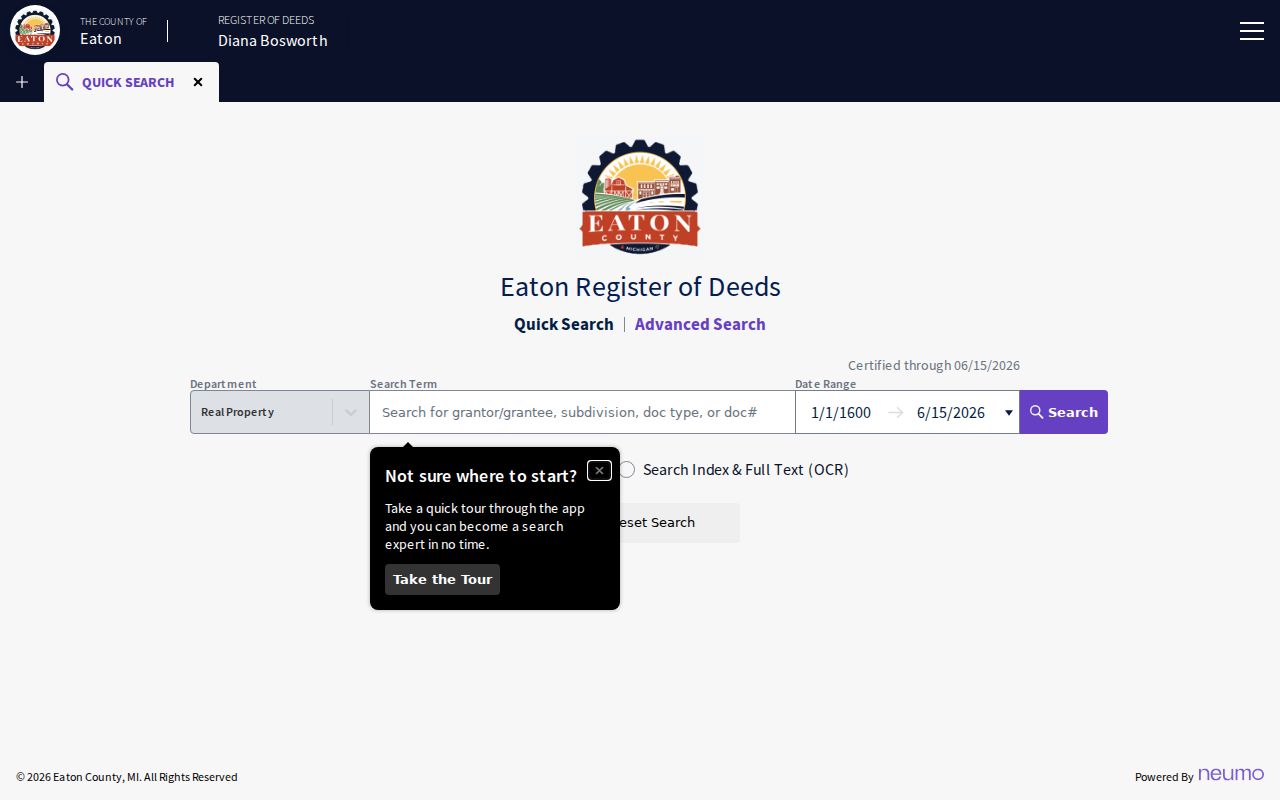
Save the portal's date notice with your search result. A later researcher can then tell which county interface and coverage statement produced it.
Trusts and Estates Can Break a Name Match
A deed chain rarely repeats one name at every transfer. The seller or buyer of record may instead be a trustee, an estate, a personal representative, an executor, a company, or a surviving joint owner. Search the name exactly as it appears on the instrument, capacity and all. A former property owner can hide behind a fiduciary role instead of an everyday name.
When an owner has died, the county probate court and the Register of Deeds hold the instrument that moved the interest. MiCOURT offers public case history for participating courts. It is neither a full probate file nor an image archive. A court order, fiduciary deed, or survivorship affidavit often explains a gap that a plain sale search cannot. A death record or obituary can point you toward the right case. Neither one transfers land. Before adding a prior owner to the chain, match the probate case and the fiduciary authority. Match the recorded deed and the legal description too.
Use Michigan Books and Archives for Older Deeds
When a web index runs out, the county Register still keeps deed books and old indexes. Those include general and tract indexes, microfilm, counter terminals, and plain or certified copies. Give the office the parcel number and the legal description. Include names in both deed roles, an estimated date range, and any book and page or document number. A quick phone call can pin down the right series. Do this before a mail or in-person request. Copy access and charges vary by county.
The Archives of Michigan county guides list deed, tax, probate, township, and court collections. These are records that have moved to state custody. Their series notes show whether an older deed trail left the county entirely. For an on-site search, the Archives of Michigan visit instructions explain how to prepare.
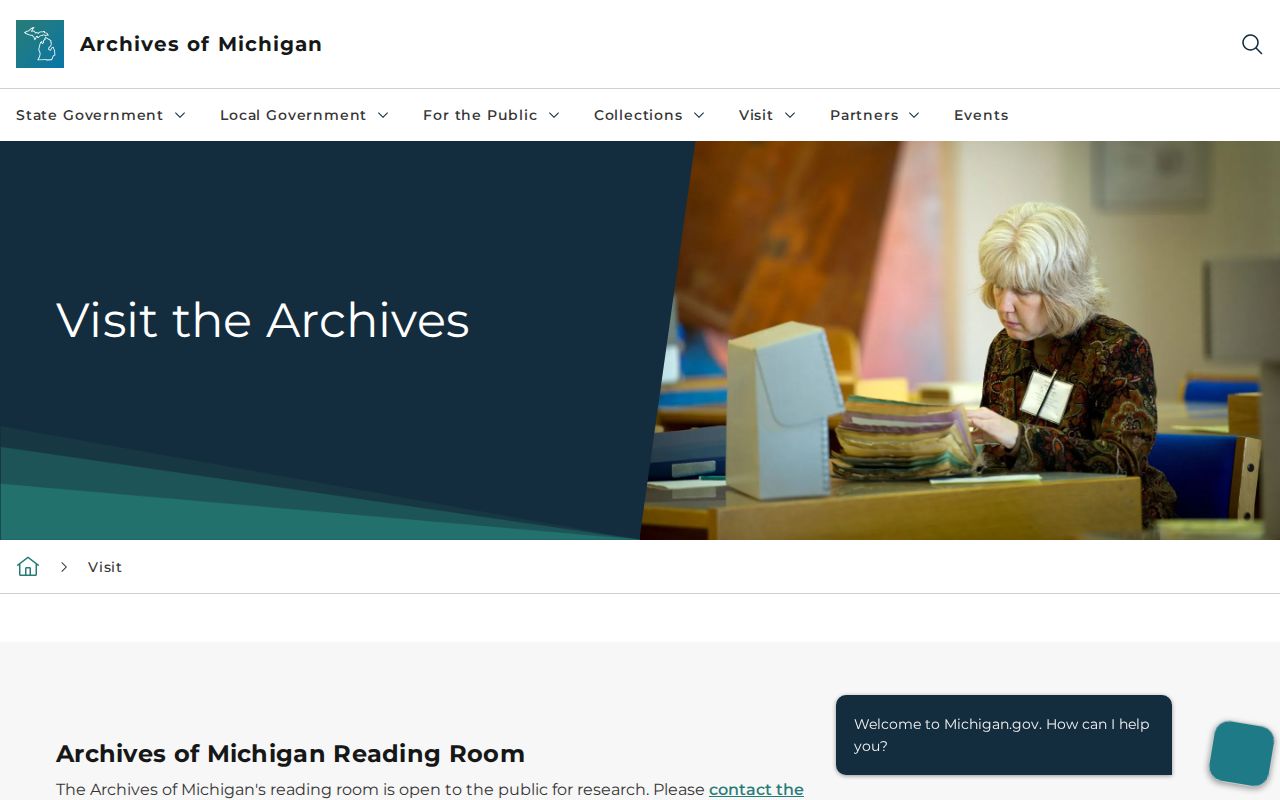
Bring the legal description. Ask about advance retrieval before you travel. The visit page walks through access steps, but it is not a statewide deed index. The Library of Michigan land-research guide also points to map and land-history collections.
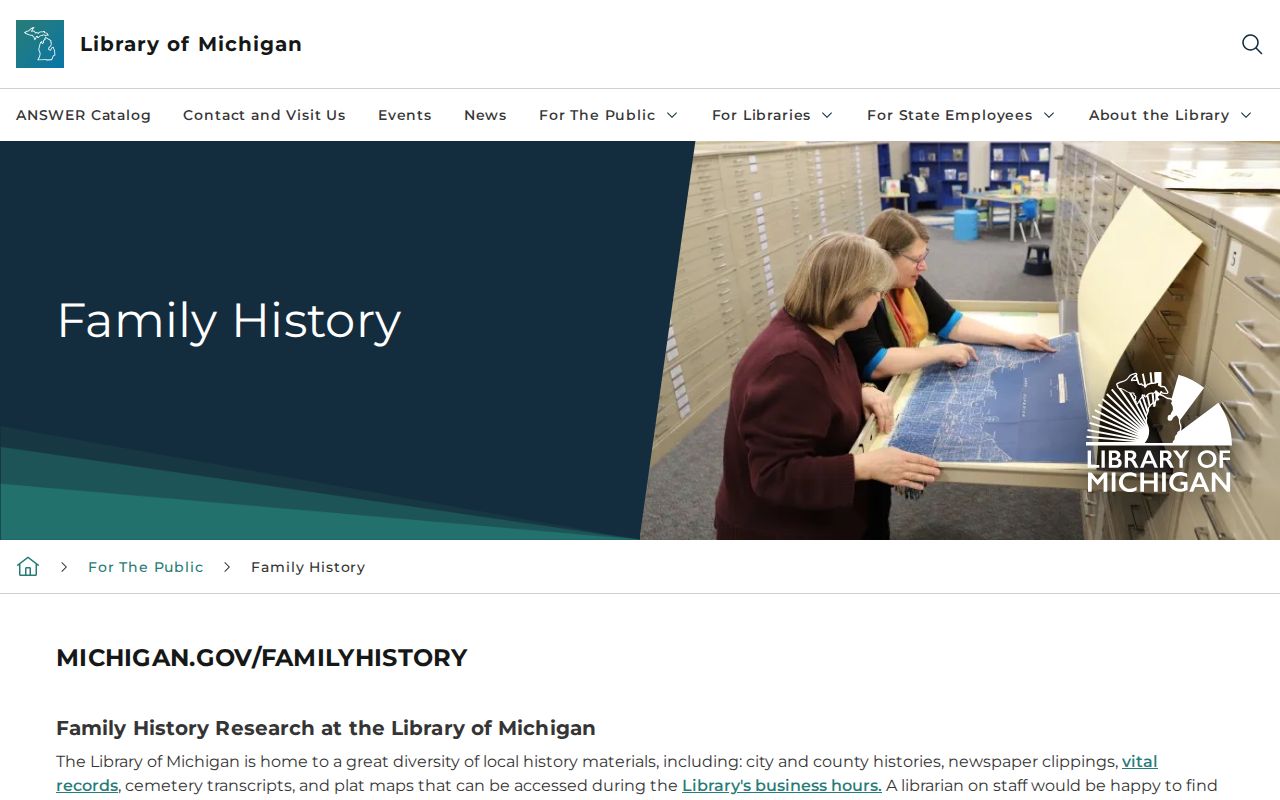
Plat books, Sanborn maps, tract books, and county histories. Old deed-book examples can tie a prior legal description to a current parcel. Each layer serves a different step. Online portals, county books or microfilm, Archives collections, and Library holdings all have their place. None of them turns an index entry into a title opinion.
Plats and Parcel Splits Change the Trail
Street addresses and parcel numbers change. The land description carries the chain. For platted property, compare the subdivision, lot, block, and plat references. For rural land, keep the township, range, section, quarter-section, government lot, and acreage together. A parent parcel may have split into new parcel numbers. So search the prior descriptions and every related instrument.
Michigan county guides and the Library's plat holdings help map an older lot name onto current land. Oakland's mapping instructions document one route. Search record type PLAT, add the county and subdivision, then open the record attachments. That workflow belongs to Oakland alone. It is not a statewide tool. Treat an old plat as a geography aid. Then verify each ownership transition in the deed records and confirm boundary facts with the recorded description or survey.
A Missing Michigan Search Result Proves Little
A failed search proves nothing. Portals can have later start years and limited name fields. Some hold unindexed images, OCR errors, or filings under a trust or fiduciary name. Washtenaw's search disclaimer compares its index to a library card catalogue. That catalogue is a guide rather than the document itself. Oakland, meanwhile, distinguishes recording details from completed name and legal-description indexing.
Work the angles. Try the other party role and spelling variants. Try former surnames, entity names, date windows, document types, and subdivision terms. With a known deed reference in hand, search the instrument number first. Where a scanned instrument exists, read it and compare legal descriptions across each transfer. If the online route still fails, ask the Register where the record sits. It may sit in a volume, on microfilm, or in a transferred collection. Say plainly which years and names you have already checked.
How Far Back Michigan Ownership Records Go
It depends on the county, the portal, and the record series. Oakland states a 1964 start for online copies of most land instruments. Other county landing pages show search features without naming an earliest year. Older material may sit in county deed books or microfilm, in the Archives' county collections, or in state land-patent files. Search the chain until an official source gives a real cutoff. Then follow that custodian's path for older records.
Use ownership history for property research. A deed chain can support house history or a title review, but it does not authorize tracking or harassing a living person. Verify any legal conclusion with the recording office or a title professional.