
Michigan Deed Types and Records
In Michigan, every county's Register of Deeds records land instruments for property within that county. A deed conveys or documents an interest in land. Related land records, such as mortgages, liens, easements, and lis pendens, are part of the same family. They are not the deed itself. County portals often use different type labels for these instruments. So search broadly by party and parcel first. Then narrow the result list once you see how that office labels things.
| Deed Type | What It Does | Common Use |
|---|---|---|
| Warranty deed | Conveys the grantor's interest with the warranties stated in the instrument. | Review a recorded transfer and its stated terms. |
| Quitclaim deed | Conveys whatever interest the grantor holds, without adding a title guarantee. | Trace a change that may not reflect a conventional sale. |
| Trustee or fiduciary deed | Shows a transfer by a trustee, executor, administrator, or personal representative. | Connect a trust or estate role to the land record. |
| Sheriff's or tax-foreclosure deed | Records a transfer tied to a court or tax-foreclosure process. | Check the linked case, judgment, redemption, and recording dates. |
| Correction deed or survivorship affidavit | May fix an earlier record or document a survivorship change. | Resolve a name, description, or ownership-chain gap. |
A name or instrument label alone cannot tell you what actually changed. Read the legal description, the grantor and grantee capacity, and the recording date. Note any earlier instrument cited in the document. Michigan's index can include transfers beyond standard sales. Military discharge records are confidential under state law. They do not belong in the ordinary public land index.
Michigan Grantor and Grantee Index
Every Michigan county has its own Register of Deeds. There is no single statewide grantor-grantee search. The Treasury county directory helps you find the right custodian. But it is not a combined deed index. In an alphabetical party index, the grantor transfers an interest and the grantee receives it. Some county indexes also support land-description or parcel searches. These help when a name is uncertain. Search both party roles and keep the county's own instrument reference for your records. Oakland's Super Index search page shows one county's name, address, and PIN entry point:
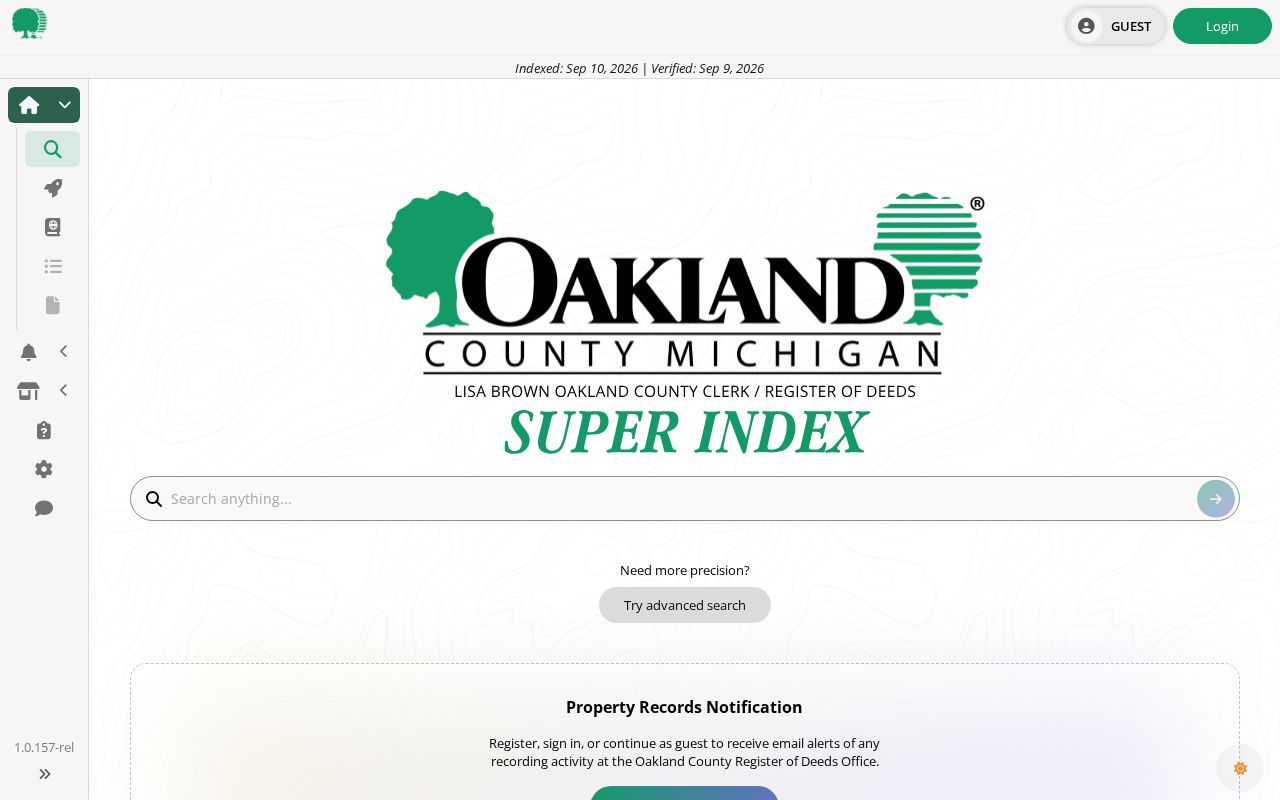
Treat this interface as an Oakland example. Other counties pick their own fields, portals, and copy access on their own terms.
- Start with the parcel's current deed or another record that names its grantee.
- Read the grantor, grantee capacity, legal description, recording date, and document reference.
- Search the prior grantor as a grantee, then match the land description before stepping back again.
- Record each instrument and check the county's stated online coverage before concluding the chain stops.
- Grantor
- The party shown as conveying an interest.
- Grantee
- The party shown as receiving an interest.
- Chain of title
- The sequence of recorded conveyances tied to the same land.
- Book/page or instrument number
- County-specific references used to identify a recorded document.
Get a Copy of Michigan Deeds
Once the index gives you a document number or book and page reference, follow that county Register of Deeds' copy process. Portals vary widely. Some show only the index. Some let you buy the instrument image online. Some require a login before any copy purchase. Washtenaw's service, for example, says a login is required to buy copies. If the image is not online, call, visit, or mail the office. Ask about copies and its current fee schedule. Michigan recording charges are not a universal online image price. Confirm with the local office.
Recorded, not guaranteed. A Michigan deed index points to filed instruments; it is not a title opinion, and a search result does not establish that title is clear or that no other interest exists.
Oakland Deed Records Online Since 1964
Oakland County shows why online coverage must be checked carefully. The check has to happen county by county. It also has to happen record type by record type. Its official land-record page states that online copies reach back to January 1, 1964. One exception exists: subdivision plat maps. The county reports nearly 18 million land records dating to the early 1800s. Of those, 13.7 million sit online. That is the share from 1964 onward. Those numbers describe Oakland alone. They say nothing about the other 82 counties, where deed records coverage varies. The county page also routes visitors to the Register of Deeds and its Super Index.
The official Oakland Property & Land page lists land-record resources and the portal:
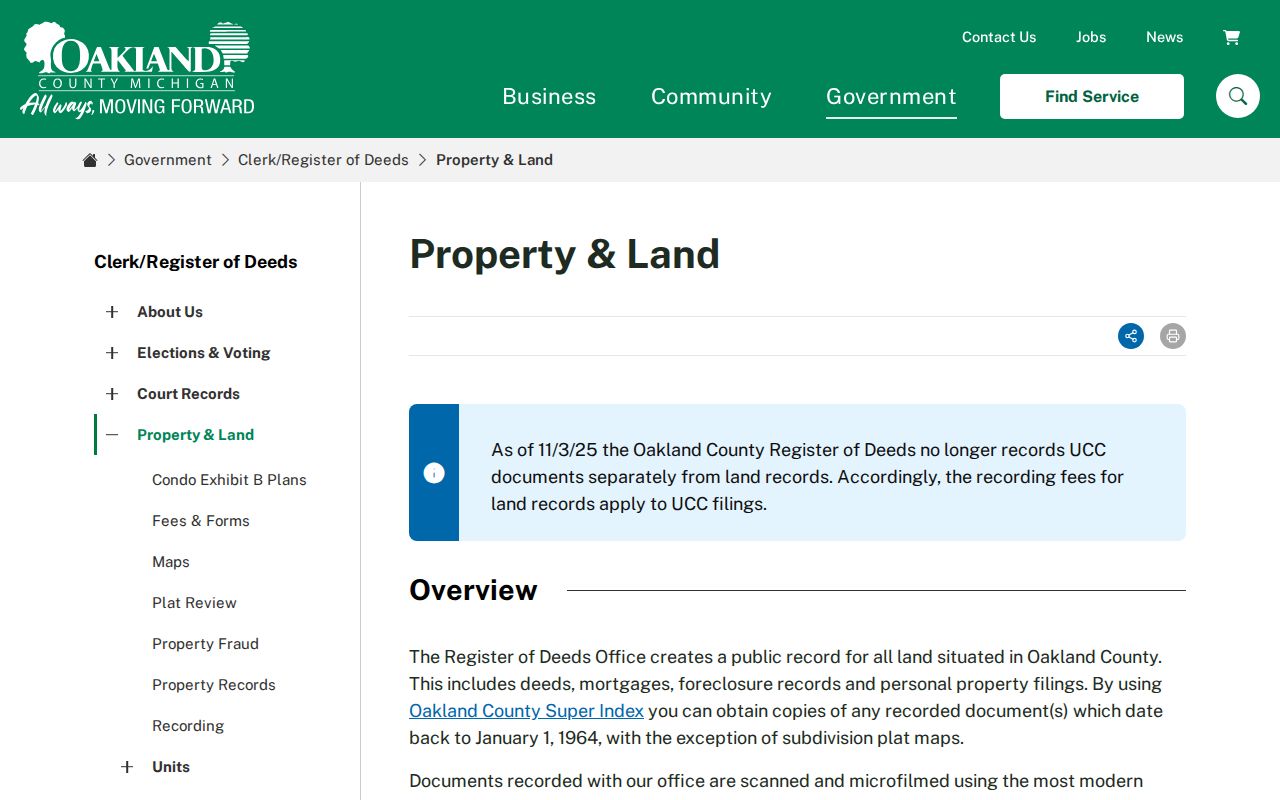
Read that date as an online-copy boundary, not proof that earlier instruments were never recorded. Ask the local office how to search its older books, plat maps, or microfilm. That matters whenever your deed falls outside the online image range.
Michigan GovOS Deed Search Controls
Several Michigan counties use GovOS/PublicSearch. The landing pages do not state one statewide earliest-online year. The Oceana Real Property portal displays a certified-through date. That notice describes index currentness, not the first year of records. The search surface also separates an index-only query from full-text OCR. It also includes an image control. The Oceana PublicSearch portal shows one county's field labels:
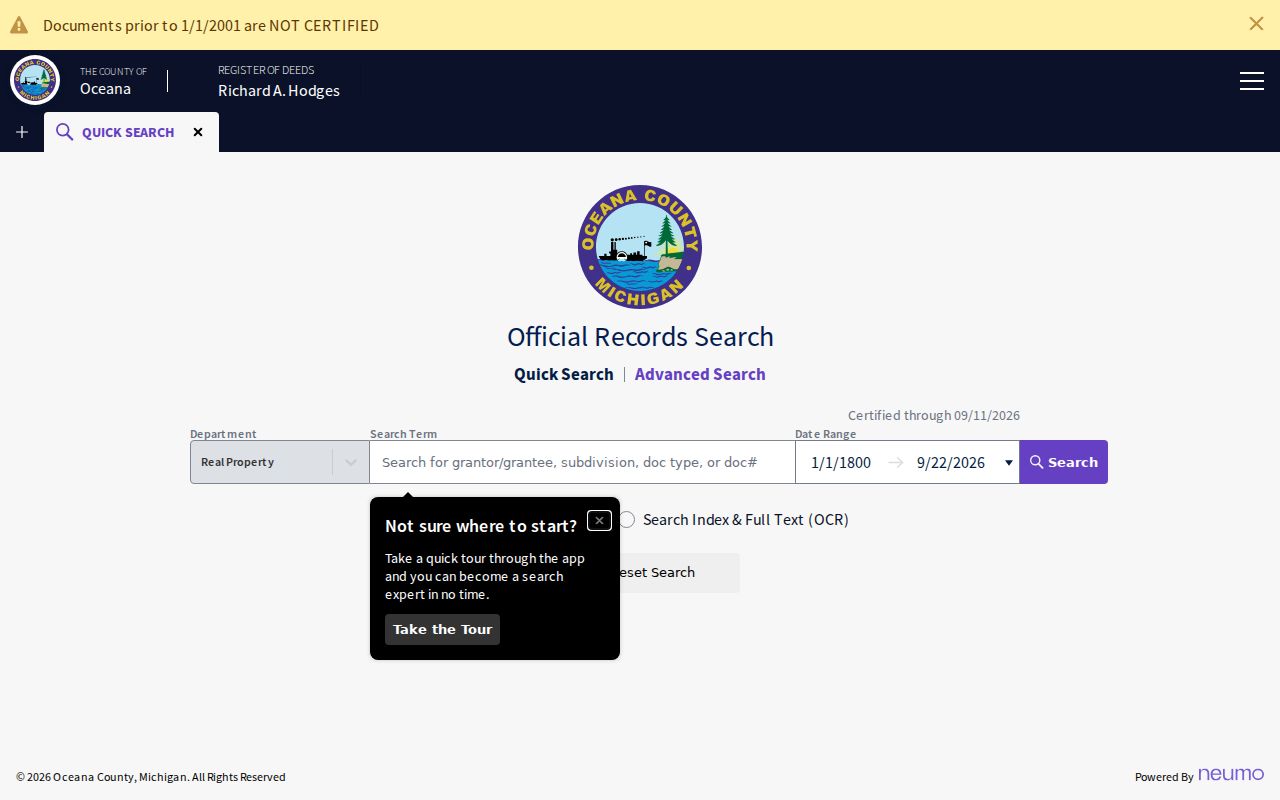
Use its controls to narrow a county deed search, and check the local page for image access and coverage dates.
| Field or control | Type | Required | Observed use |
|---|---|---|---|
| Department | Context or selector | Yes | Real Property is the land-record context. |
| Search Term | Text | No | Grantor, grantee, subdivision, document type, or document number. |
| Recorded Date | From/to dates | No | Limit the recording-date range. |
| Date shortcuts | Buttons or choices | No | Short periods through the last year. |
| Image | Checkbox or toggle | No | Requests image-related results where available. |
| Search scope | Choice | No | Index only or index plus full-text OCR. |
OCR can help you locate a term inside a recorded deed. It can also misread a name, legal description, or instrument number. Confirm every hit against the document image itself.
Michigan Deed Index Result Fields
A county deed-index result can show several details. These include the parties, the date, the instrument type, the land description, and image status. Treat that list as a field inventory. It is not a promise that every portal displays every item. Oakland's guide notes that recording information can appear as soon as a document is recorded. Staff indexing of names and legal descriptions may finish later. Its Index and Verification icons make that processing status visible to the searcher.
| Parties | Grantor and grantee names, which may be trusts, companies, estates, or fiduciaries. |
|---|---|
| Reference and dates | Instrument number, book/page when shown, recording or file date, and sometimes instrument date. |
| Land and type | Document type, legal-description text, subdivision, lot/block, or PIN where indexed. |
| Image and status | Image/PDF link, page count, availability, copy controls, and any indexing or verification mark. |
Consideration or transfer-tax references may appear, be suppressed, or be absent. Never fill a missing field with an assumption. Build your citation from the document number, recording date, land description, and the official image link.
Washtenaw Index Is a Guide
Washtenaw County compares its online index to a library-card catalogue: it guides a search but is not the underlying instrument. Its disclaimer adds that data can change and that spelling variants should be tried. A login is needed to purchase copies through the county's self-service route. Treat those as Washtenaw access rules, not a statewide login standard. The Washtenaw public-search disclaimer explains the index limitation:
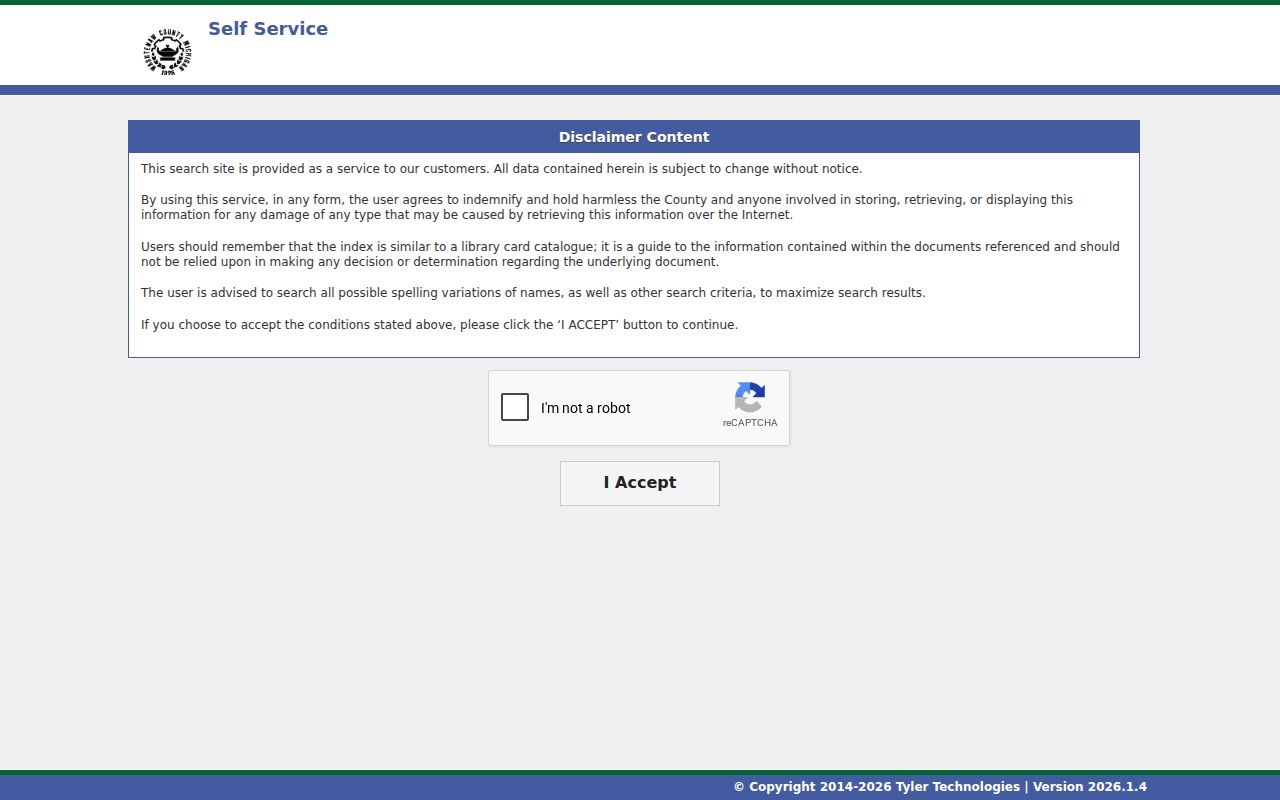
Where the county provides both index and image, check the image before trusting a typed party name, legal-description string, or instrument label. If only the index is open to the public, ask the Register of Deeds about a copy and its current price. The image is the record to cite. The index is a finding aid.
Older Michigan Deeds Beyond Portals
Not every Michigan deed sits in a modern portal. Recording systems went online at different times in each county. Older books often live only in bound volumes, liber pages, or microfilm reels at the local office. When a deed search stalls, ask the Register of Deeds what the index still points to. It may be a deed book, a specific liber and page, a microfilm reel, or a bare transfer note.
The Archives of Michigan publishes county guides covering all 83 counties. Each guide lists local land, tax, probate, and government holdings for that county. The Library of Michigan land-research bibliography goes further. It points researchers to plat books, tract books, county histories, early deed samples, and Sanborn maps. The Archives county-guide index routes researchers to local record holdings:
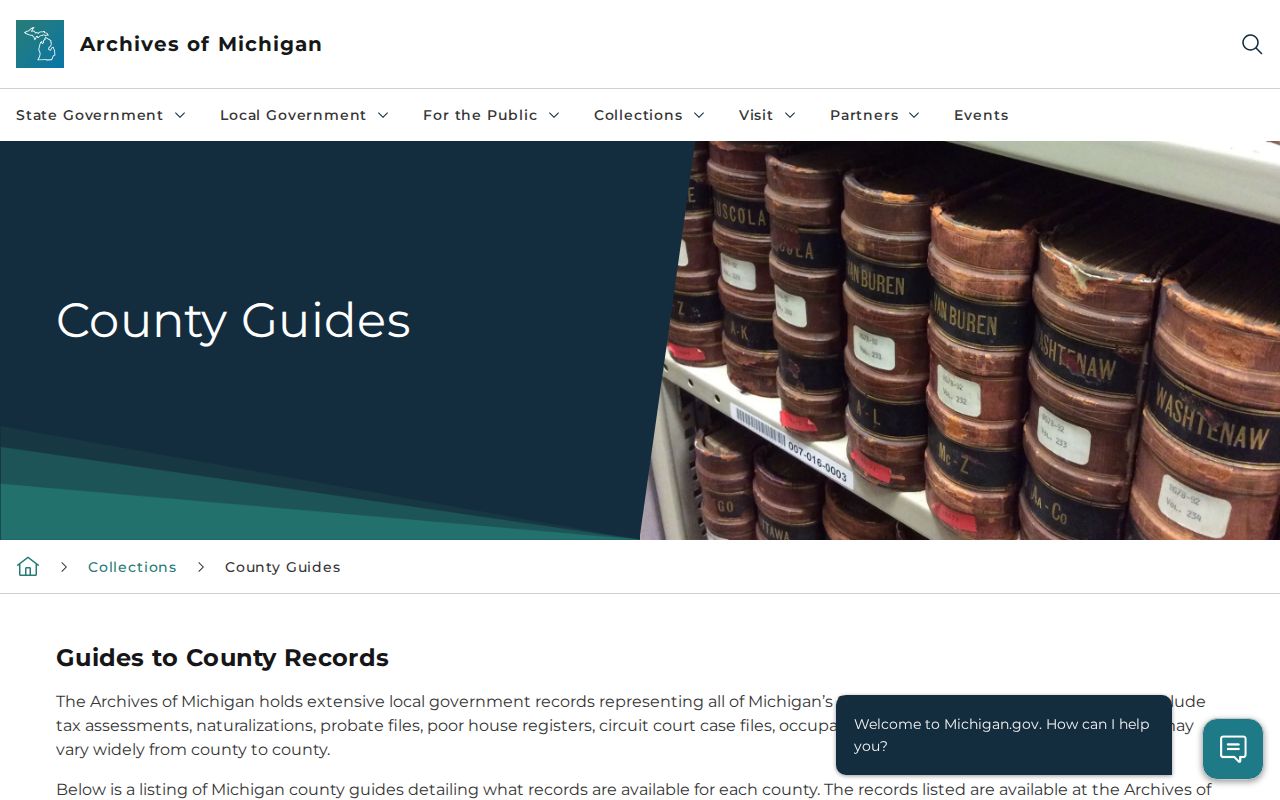
Match the guide to your county and record series first. A listing does not mean every deed is held, or digitized, at the archives.
Preparation saves time at any archives visit. Write down the township, range, section, subdivision, lot and block, prior owner names, and the modern PIN. Do this before you request copies or travel. The Archives visit instructions ask researchers to identify a legal description. They also ask researchers to contact staff about advance retrieval. Old land research rarely stops at one series. A deed index may not explain a transfer alone. Probate files, assessment rolls, plats, newspapers, or a state land patent can hold the missing piece.
The Secretary of State official repository identifies the state land-patent route. Those records moved to the Archives in 1994. County deeds, though, still follow the county recording trail. For a backward chain across older years, see research on former Michigan property owners.
Michigan Deed Copies and Fraud Alerts
A county copy request works best with details. Include the parcel address and local unit. Add the PIN, the legal description, suspected party names, the date range, and any document number or book/page reference. State whether you need a certified or uncertified copy. Submit it by phone, in person, through the county portal where one exists. You can also mail it with payment under that office's instructions. The statewide Treasury directory lists official county links and contact details.
Fees follow a published schedule. Michigan's recording-fee schedule sets $10 for the first page. Each added page costs $3, assignment or discharge notations cost $3, and a $5 automation fee applies. Those are recording charges, not a uniform price for online images. The Attorney General puts certified deed copies at roughly $1 per page. A certification fee of about $1 is added, though county schedules vary and should be checked. Its consumer alert also warns against $50 to $100 third-party deed-copy mailers. Get copies from the custodian named in the official directory.
Some counties add a fraud watchdog. Oakland's Property Records Notification sends an alert when a matching document is recorded. A similar Washtenaw County service does the same. Neither blocks recording nor judges a filing's validity. Oakland's official portal describes its notification service:
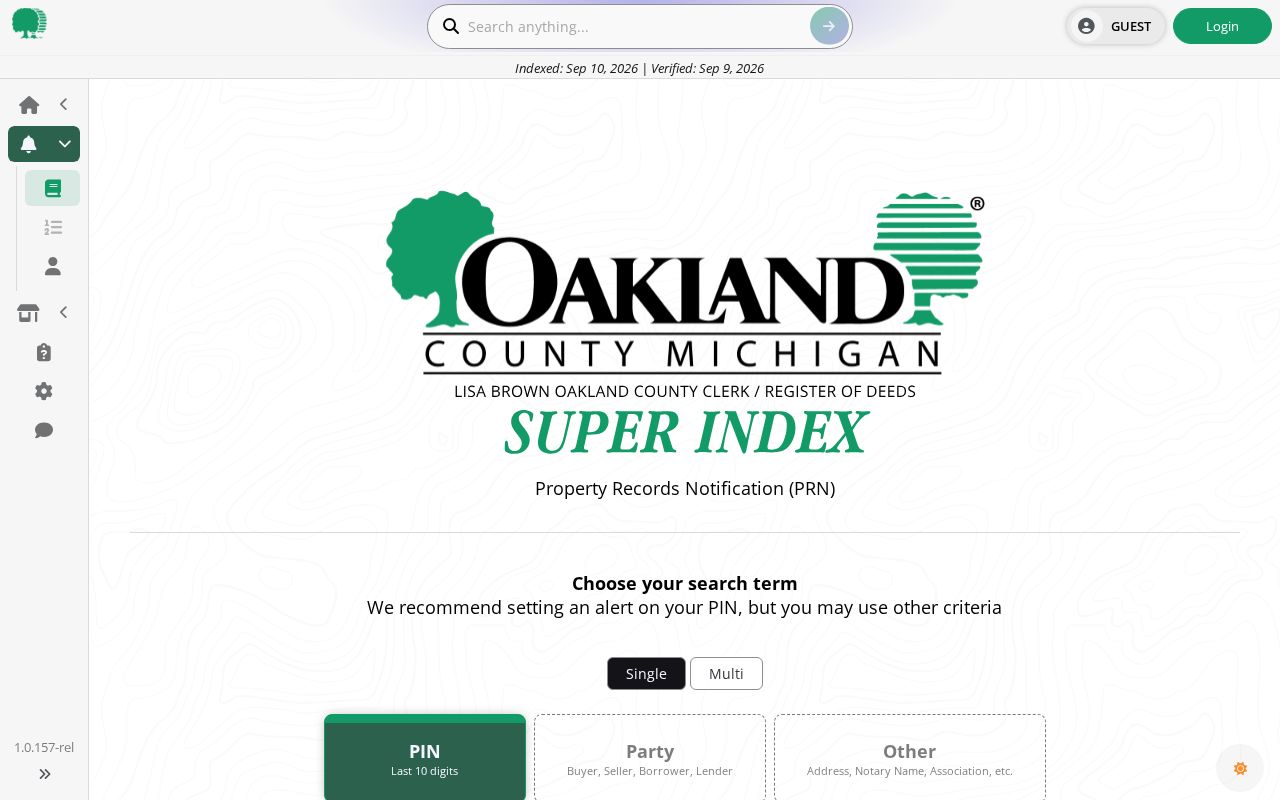
Treat an alert as a prompt, not a verdict. Pull the instrument itself, then contact the Register of Deeds, your lender, a title company, law enforcement, or an attorney if the filing looks unfamiliar. For a non-indexed administrative record, submit a written Michigan FOIA request to the public body holding it; court records follow court rules instead. The sidebar links to the Attorney General's request guidance.