
Michigan Property Tax Record Fields
Michigan runs no statewide owner-and-address search for property cards. Local assessors keep the tax roll and the parcel-card fields. Treasurers handle the bills, payments, delinquency, and related notices. A county, city, township, or village portal may show some of both. Coverage and field names are set locally. The State Tax Commission supplies statewide guidance and county value reports. It offers no live bill for each parcel.
| Field | What It Shows | Where |
|---|---|---|
| Assessed value / SEV | Local value fields after assessment and equalization. | Local assessor; county reports through the State Tax Commission. |
| Taxable value | Value used with millage to compute the tax base. | Local assessor and tax bill. |
| Owner or taxpayer | Name as displayed on the annual roll. | Local assessor or parcel card. |
| PRE or other exemption | Exemption status or percentage attached to the assessment. | Local assessor; application file may be held locally or by Treasury. |
| Tax bill and status | Amount billed, payment entry, or delinquent-tax status. | Local treasurer or tax portal. |
| Transfer data | Transfer date, price, PIN, and local-unit fields on Form 2766. | New owner files with local assessor. |
Each field answers a different question. Assessed value is not the bill amount. A sale price does not automatically become the value used for assessment either, so read the field name, tax year, and custodian with every figure.
Michigan Tax Bill and Assessment Lookup
Take the bill to the treasurer. Take the parcel card to the assessor. The state Treasury's property-tax landing page links forms, reports, the State Tax Commission, millage resources, and the General Property Tax Act, but it does not replace the local bill record.
- Identify the county and the local city, township, or village that assesses the parcel.
- Search the local treasurer's bill portal by address or PIN and note the tax year.
- Open the assessor card for assessed value, SEV, taxable value, and exemption fields.
- If a payment is past due, ask the treasurer which delinquent-tax or FGU record controls the next step.
- Assessed value
- Generally one-half of true cash value, the assessor's usual-sale estimate; neither is the tax bill.
- Millage
- The rate applied to taxable value to calculate tax.
- Principal Residence Exemption
- A local classification that can exempt qualifying school-operating millage.
- Tax lien
- A recorded claim tied to unpaid tax; check for the instrument and any later release.
- Tax delinquency
- An unpaid tax status handled through the local treasurer and, later, the FGU process.
Keep the tax year with both. A newer payment entry can sit in the treasurer system while the assessment card still shows its annual roll snapshot.
Appeal a Michigan Property Tax Assessment
Begin with the assessment notice. The local assessor holds the evidence. That evidence covers the parcel, classification, or exemption at issue. Michigan's Board of Review form index includes Form 618/L-4035, a petition. It also lists Form 1019, a notice. Use the local unit's notice and current calendar for meeting dates and the filing deadline. State Tax Commission forms support the process, but local instructions control where and when a petition is filed.
Check the notice for the Board of Review date. For a PRE denial by a local assessor or county official, the appeal to the Michigan Tax Tribunal is due within 35 days of the denial; a Treasury denial is appealed to Treasury within 35 days of receipt. Confirm the correct route and current filing instructions for the decision in hand.
Michigan Property Tax Value Terms
Michigan keeps several values because they do separate jobs. True cash value is the assessor's estimate of the usual selling price at a private sale. Assessed value generally sits at 50 percent of that under the uniform-assessment rule. State Equalized Value follows county and state equalization. It often matches AV at a factor of 1.0000. Taxable value is generally the lower of SEV or capped value, and millage is applied to it.
The State Tax Commission posts county SEV and taxable-value reports from 2008 to the current report set, with an online venue for reports from 2013 forward. Its taxable-valuations page helps compare county figures. None of it is a parcel bill.
The State Tax Commission explains the statewide value-report route:
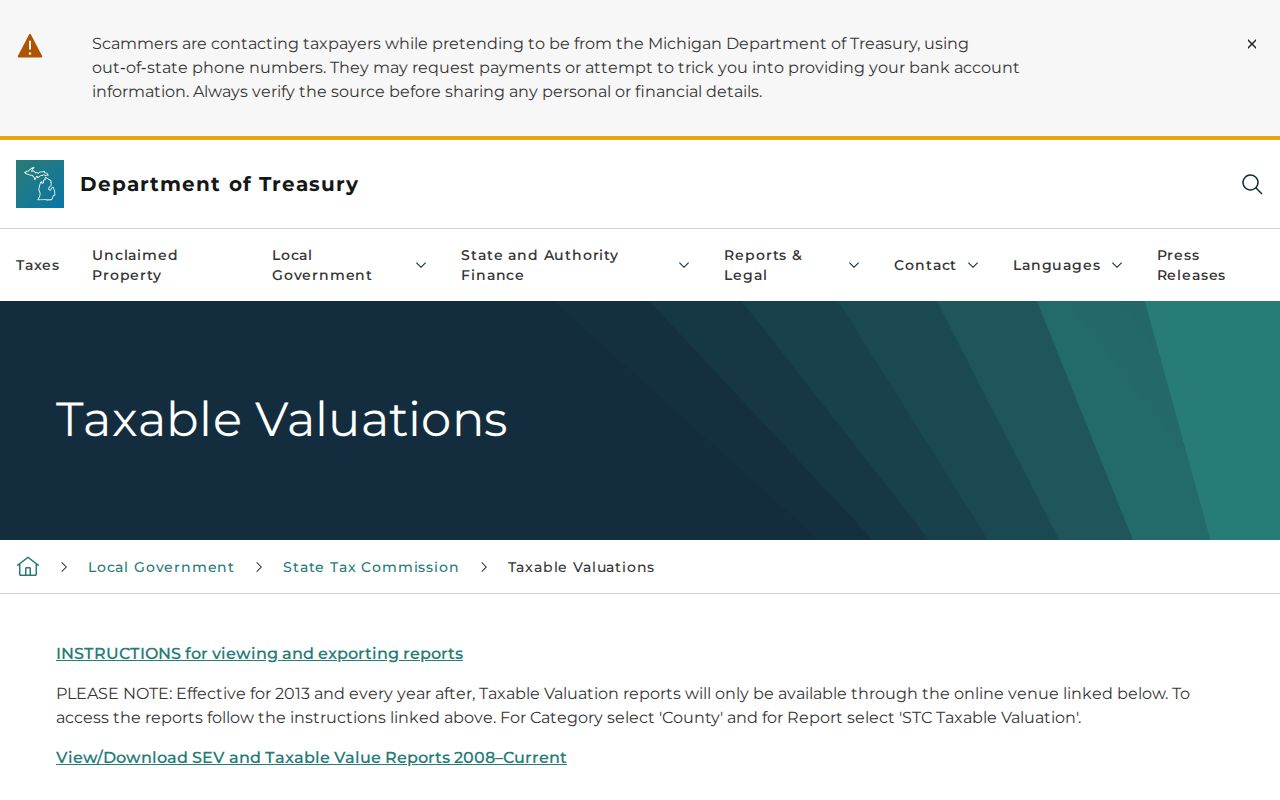
Keep the value label with its year. A recorded sale price is transaction evidence, not a stand-in for TCV, AV, SEV, or TV. Treasury's transfer-of-ownership guidance puts it plainly. Sale price is not presumptive true cash value, and assessment should not be set automatically at half the price.
Michigan Form 2766 and Roll Lag
A property transfer in Michigan starts a paperwork clock. The buyer or transferee files Form 2766/L-4260, the Property Transfer Affidavit, with the city, township, or village assessor within 45 days of the transfer. The form collects the property address, county, transfer date, local unit, purchase price, parties, and a 10-to-25-digit PIN. It takes the legal description when no PIN exists. It also states plainly that the information is not confidential. The official Form 2766 lists the current fields.
The tax roll works on a lag. Assessment dates to December 31 for the following year. A recorded deed and a filed transfer affidavit can both precede the next public card update. Michigan sets no statewide number of days for an assessor portal to refresh after closing. After a recent sale, weigh the latest deed's recording date against the owner or taxpayer field. Also check the tax year shown on the local parcel card.
Note: A parcel card is an annual assessment snapshot, so a newer conveyance may appear first in the county deed index.
Michigan Property Tax Exemptions
The Principal Residence Exemption is called PRE. It covers an eligible owner-occupied principal residence. It can exempt local school-operating millage up to the statutory limit. The owner claims it by filing an affidavit with the local assessor. A PRE percentage is a tax classification field. It is not proof that a person occupied the property on a specific day. The local card may also show other exemption codes, classifications, special assessments, or taxable-value adjustments. The PRE background page describes owner and assessor requirements. Treasury groups other programs for homeowners, disabled veterans, and poverty exemptions. It also covers neighborhood enterprise zones, business and community projects, and qualified environmental or agricultural property. The application or eligibility file may stay with the local assessor or Treasury. The card may show only that short code. The official Michigan PRE page identifies the affidavit route and local assessment role:
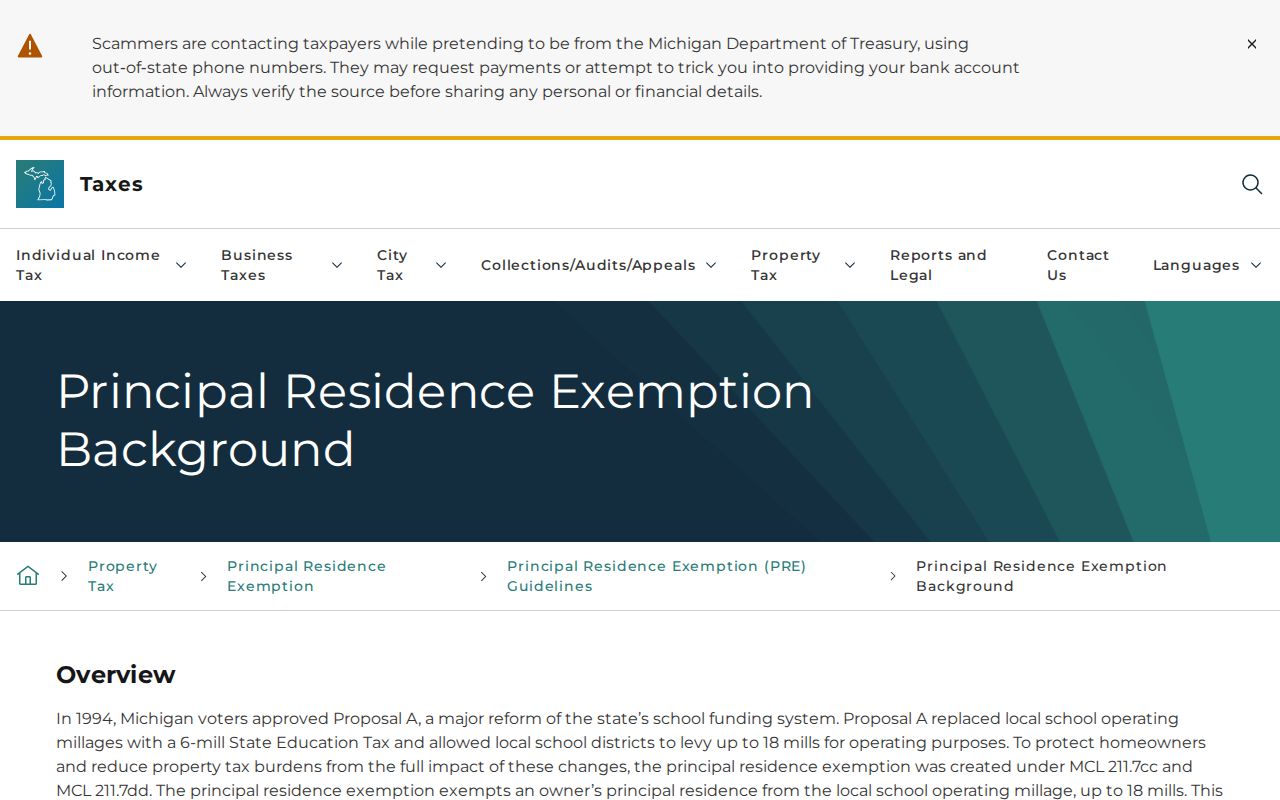
Read a PRE entry as a roll classification. For a decision or an appeal, rely on the dated notice from the agency that issued it.
Michigan Property Tax Appeal Forms
A dispute over value, classification, or an exemption starts locally, with the assessment notice and the Board of Review. Michigan's State Tax Commission posts the key papers on one forms page. There is Form 618/L-4035, the petition itself. Form 1019 serves as the notice. Value worksheets sit alongside them. The notice and the local calendar supply the meeting date and filing steps, so no single statewide deadline applies to every property in Michigan.
Assemble a tight record set before you file. That means the assessment notice, the parcel card with its value and property characteristics, the parcel number, and evidence matching your stated ground for review. Keep the filed form, proof of delivery, and the decision in one place. Timing differs by who denied you. A PRE denial from a local assessor or county official opens a 35-day window to the Michigan Tax Tribunal, counted from the denial. A Treasury PRE denial goes back to Treasury within 35 days of receipt. Confirm the current rules for your specific decision.
The official form index shows the Board of Review petition and notice route:
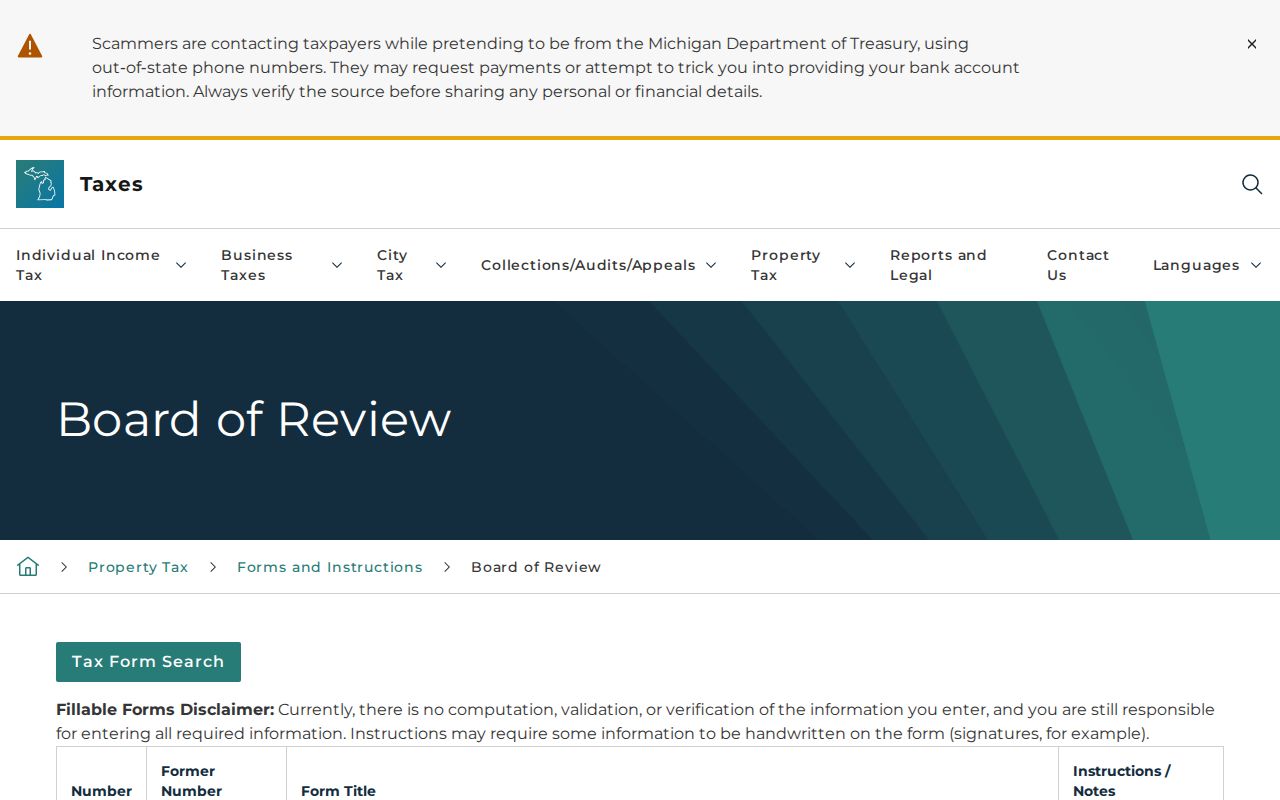
A Board of Review outcome and a Tax Tribunal case sit in separate files. Follow the body named on the notice for the next step.
Michigan Delinquent Property Tax Stages
An unpaid Michigan tax bill does not sit still; it moves through stages. Delinquent taxes return to the county treasurer on March 1. Where assigned, the foreclosing governmental unit, or FGU, handles forfeiture and foreclosure from there. Forfeiture in the second year is not a title transfer. The record trail runs on: a circuit-court judgment, then a redemption deadline, then an auction, then a deed. Treasury's foreclosure process page explains the three-year timeline. It also explains the procedural milestones that mark it. Along the way, the FGU, the county treasurer, the circuit clerk, and the Register of Deeds each hold a different piece of the evidence.
- Delinquency: tax year, parcel, balance, and payment status at the local or county treasurer.
- Forfeiture: status, FGU, parcel, and legal description from the county treasurer or FGU.
- Judgment: court case, judgment date, and redemption deadline from the circuit clerk and FGU.
- Auction and transfer: sale status and final instrument from the FGU, Treasury route, and Register of Deeds.
Note: A delinquency notice, forfeiture status, foreclosure judgment, auction listing, and recorded deed are each distinct events in Michigan's tax record trail.
Michigan Property Tax Auction Records
Track a tax-foreclosure parcel through the FGU's whole file rather than a single auction list. Treasury's taxpayer resources page identifies the FGU and points to excess-sale-proceeds materials. The FGU itself publishes the parcel list, auction terms, current status, and notice. Ask there first.
The three-year clock works like this. Forfeiture arrives March 1 of the second year. The FGU petition is due by June 15 in year three. The circuit court enters judgment by March 30 of the following year. Redemption expires March 31. Auction and transfer steps come after. For properties foreclosed after December 22, 2020, Treasury also describes an excess-sale-proceeds process. Current forms and deadlines rest with the FGU.
Line up the tax year against the forfeiture record, the court case, and judgment. Check the redemption deadline, the auction result, and the final recorded transfer too. An auction listing alone never proves that title moved.
Treasury's property-tax auction page routes readers to sales handled for participating counties:
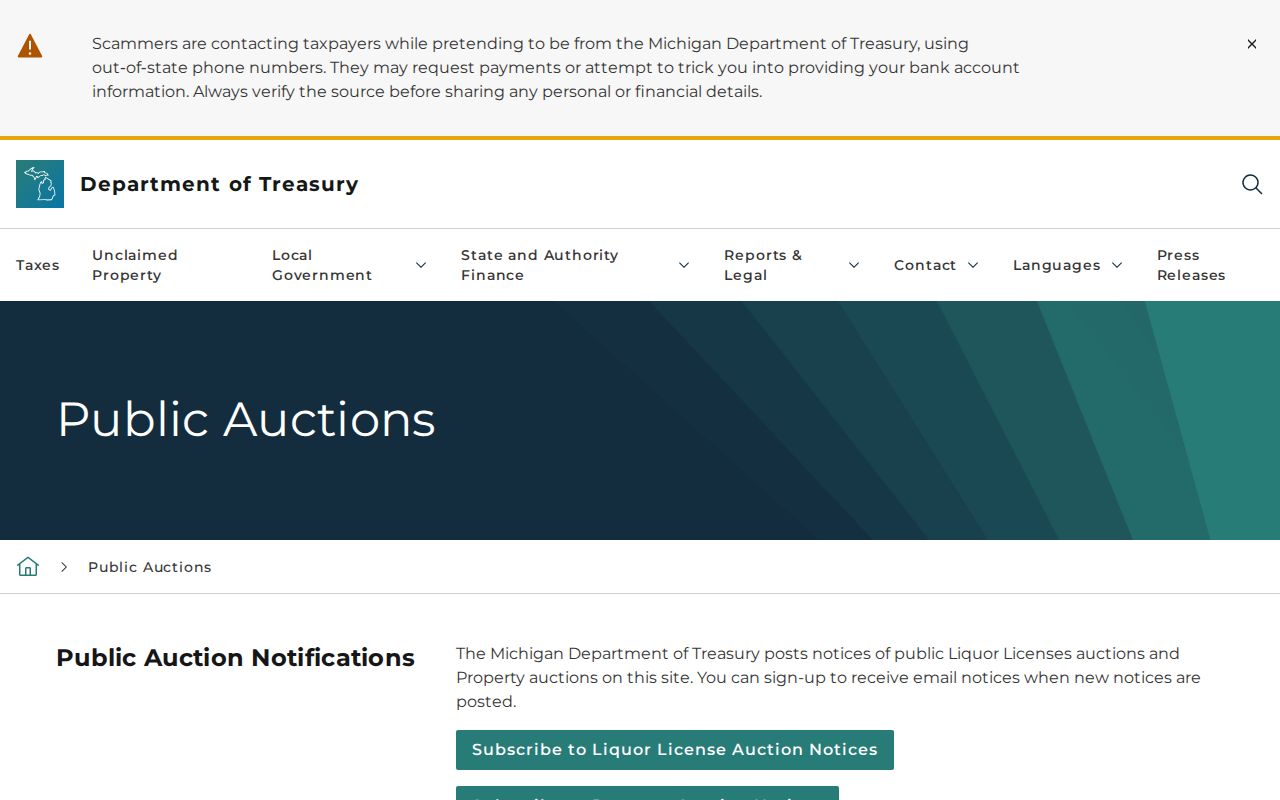
The state page points to county foreclosure auctions, not a full statewide parcel list. Confirm each property's current status with the foreclosing governmental unit.
Michigan Treasury's foreclosure guidance lays out the stage sequence:
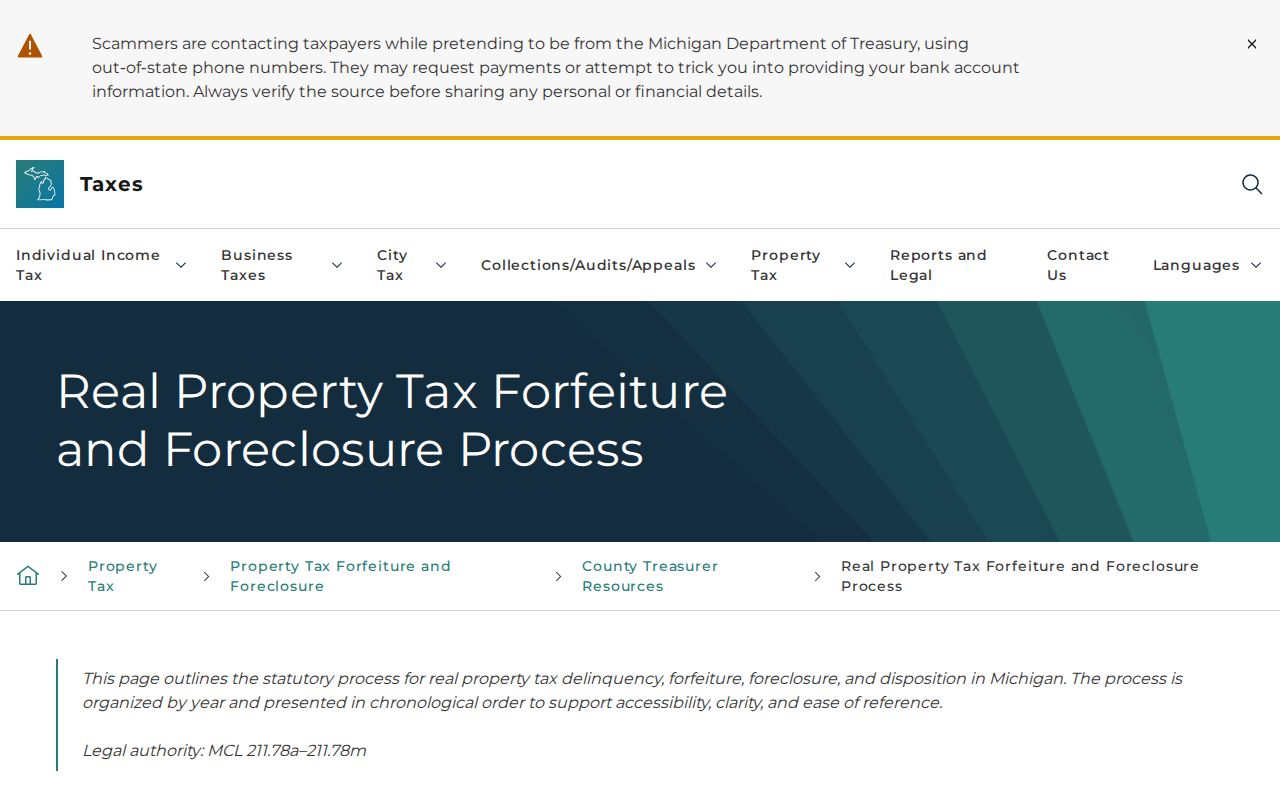
Keep judgment, redemption, auction, and recording dates separate. The later deed and its county recording date prove the transfer in the land-record chain.
Michigan Property Tax Access Varies
Local portals in Michigan vary widely. One may show only a current bill. Another adds payment history, a parcel card, or a downloadable report. It may also show an image of a supporting form. BS&A is one common vendor. Its address, name, and parcel search choices exist only at participating jurisdictions. County and local assessor portals set their own field names and coverage. Treasurer portals may carry a separate sign-in or payment workflow.
When a portal skips a record that should exist, contact the right assessor or treasurer. You can reach out by phone, at the counter, by mail, or through its copy instructions. A written Michigan FOIA request is another route to an existing public record. It comes from the public body that holds it. Name the parcel, the record type, the date range, and your preferred format. FOIA cannot force an agency to create a new record. Historic tax assessments may also live in county archival guides or local collections. Access rules are set by whichever office holds them.
Participating BS&A jurisdictions share common search entry fields, though exact labels and coverage stay local:
| Search field | Use | Local check |
|---|---|---|
| Address | Find the parcel card or bill tied to a situs address. | Confirm address format and assessment unit. |
| Name | Find owner or taxpayer fields where the local portal enables name search. | Check exact field label and current coverage. |
| Parcel number | Open a known parcel record directly. | Use the local PIN format and check for parcel changes. |
DTMB's document-imaging service page was updated May 26, 2026. It describes imaging and indexing support for local governments. That makes rechecking county systems over time worthwhile. It does not prove every older roll is online. Historic tax assessments may instead surface in Archives county guides or local collections. For broad context, the State Tax Commission reports link county SEV and taxable values. For a specific amount due, use the local treasurer.
For finding owners and parcels, see Michigan property search. The tax bill, the assessment card, and the statewide report each carry their own source. Each also carries its own date.